|
 |
ODDS-and-ENDS INFO - IF IT DOESN'T FIT ANY OTHER CATAGORY - IT GOES HERE
What do we do with recommendations about different items and resources that may be of interest to our Parkinson's community but they don't fit into any particular category? We put them here.
| Medication Alone Insufficient in Treating Depression in Parkinson's Disease -- National Parkinson Foundation |
Sacramento Bee - New findings from the National Parkinson Foundation (NPF) Parkinson's Outcomes Project show that antidepressants alone do not improve depression in Parkinson's disease. Depression was most effectively treated at centers that refer their depressed patients to a mental health professional or social worker. These findings were presented last week during the 17th Annual International Congress of Parkinson's Disease and Movement Disorders in Sydney, Australia, June 16-20, 2013.
To read more of this article www.nwpf.org/News.aspx?Item=4294
Return to top of this page
|
Parkinson's Disease Learning Modules --- Muhammad Ali Parkinson Center and Movement Disorders Clinic
|
Carla Cozart, of Abbeville, who had both ovaries removed instead of one, encourages patients to speak up when something goes wrong. An education campaign will help inform South Carolina residents how to avoid hospital errors and infections. - See more at: http://states.aarp.org/protect-yourself-from-hospital-errors/#sthash.5SPklBks.dpuf
Carla Cozart says she now knows the value of asking tough questions and holding health care providers accountable.
After insisting that one ovary be left intact during her hysterectomy five years ago, she awoke to find both ovaries had been removed.
- See more at: http://states.aarp.org/protect-yourself-from-hospital-errors/#sthash.5SPklBks.dpuf
The Muhammad Ali Parkinson Center and Movement Disorders Clinic offers free online learning courses to help you and your caregiver cope with this disease. The courses aim to make learning about Parkinson's disease and effective management as engaging as possible.
At this time there is one course available: Parkinson's Disease 101. It consists of 3 modules, an introduction to the Muhammad Ali Parkinson Center and an evaluation. On average, the course takes about 40 minutes to complete and provides an overview of Parkinson's disease. Some topics covered are dealing with diagnosis overview of symptoms introduction to treatment options
Upcoming modules will discuss medication, deep brain stimulation surgery, exercise, and nutrition. Sign Up!
See more at this link http://www.thebarrow.org/Neurological_Services/Muhammad_Ali_Parkinson_Center/211439
Return to top of this page |
Did You Know? --- The VA (Veterans Administration) has a special website on Parkinson's disease for Vets.
|
Carla Cozart, of Abbeville, who had both ovaries removed instead of one, encourages patients to speak up when something goes wrong. An education campaign will help inform South Carolina residents how to avoid hospital errors and infections. - See more at: http://states.aarp.org/protect-yourself-from-hospital-errors/#sthash.5SPklBks.dpuf
Carla Cozart says she now knows the value of asking tough questions and holding health care providers accountable.
After insisting that one ovary be left intact during her hysterectomy five years ago, she awoke to find both ovaries had been removed.
- See more at: http://states.aarp.org/protect-yourself-from-hospital-errors/#sthash.5SPklBks.dpuf
Please Note: While a PADRECC center (see info below) may not be near you, the site has a lot of useful information for PD Vets.
In 2001, the Department of Veteran Affairs (VA) created six specialized centers known as the Parkinson’s Disease Research, Education, and Clinical Centers or "PADRECCs". These Centers of Excellence are designed to serve the estimated 80,000 veterans affected by PD through state-of-the-art clinical care, education, research, and national outreach and advocacy.
The PADRECCs are staffed by internationally known movement disorder specialists, neurosurgeons, psychiatrists, psychologists, nurses, researchers, educators, social workers, and other PD experts. The PADRECCs are located in Philadelphia, Richmond, Houston, West Los Angeles, San Francisco, and Portland/Seattle. The PADRECCs assist veterans in effectively managing PD and other movement disorders by way of VA pharmacy benefits, physical, occupational, and speech therapies, medical equipment, surgical services, and other valuable resources. More about the PADRECCs.
Click here to go directly to the PADRECC website http://www.parkinsons.va.gov/
Return to top of this page |
Speech to Speech Services
|
Some people with Parkinson's disease have a challenging time using the telephone. Sometimes speech is at a lower volume and is not easily understood. This can be frustrating for the person with Parkinson's and can cause unneeded stress. There is help for this situation. Each state has a telecommunications relay service. These organizations offer a variety of services and equipment that may enable you to enjoy using the phone again.
Enhanced speech-to-speech is a service that can assist you in staying connected with your family and friends, or making a business phone call. A specially trained operator serves as a speech disabled user's voice and repeats his/her responses to the called party. The operators ensure that the speech disabled user will be heard and understood. It is like a three-way conference call with the operator facilitating the communication of the two individuals on the call. You can also ask your family and friends to call you through the speech-to-speech service.
In South Carolina --- dial 7.1.1
To learn more about the South Carolina Relay, visit relaysouthcarolina.com
FREE TELEPHONE EQUIPMENT can be provided for SC residents who are deaf, hard-of-hearing, def-blind, blind/low vision with hearing loss, or speech-impared. The South Carolina Equipment Distribution Program (SCEDP) 803-896-8337 (Voice/Local) or 1-877-225-8337 (Voice/Toll Free) or 803-896-8334 (TTY/Local) or 1-877-889-8337 (TTY/Toll Free) Website: scedp.org E-Mail: AmplifyLife@scedp.org
Return to top of this page |
New scan can speed Parkinson's diagnosisDoctors say patients who may have degenerative disease can cut down on wait for treatment
By Karen Schwartz, Special to the Chicago Tribune November 9, 2011
|
|
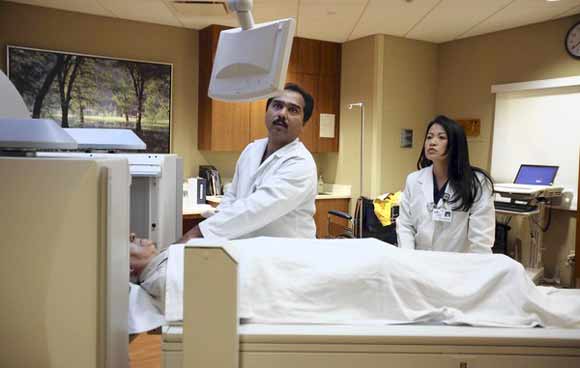
Nuclear medicine technicians Roy George and Tess Gavilan set up the gamma camera at Central DuPage Hospital in Winfield. After an injection of a radioisotope called DaTscan, this 91-year-old woman's brain will be scanned for Parkinson's disease.
(Photo Chuck Berman/Chicago Tribune) |
A new scan to help in difficult-to-diagnose cases of Parkinson's disease or other parkinsonian syndromes is available at more than 80 U.S. hospitals, including some in the Chicago area, since receiving federal approval earlier this year.
During the DaTscan test, an imaging drug is injected into a patient's bloodstream and the patient undergoes a single-photon emission computed tomography, or SPECT, scan. Patients with Parkinson's disease or other parkinsonian syndromes have scans that show low levels of dopamine, the neurotransmitter critical in controlling movement and other muscle functions.
In cases where a diagnosis isn't necessarily clear-cut, the DaTscan offers important advances in patient care and treatment, said Dr. Michael Rezak, director of the Movement Disorders Center at Central DuPage Hospital, where the scan is offered.
"DaTscan is used in difficult-to-diagnose cases and must be used in conjunction with a clinical evaluation and a patient's response to medications," Rezak said. "The earlier we get treatment started, the better. Before DaTscan we would watch and wait because there were no other objective tests to use. Now we can get a diagnosis sooner."
Click Here to read more of this article from the Chicago Tribune
Note: The Movement Disorders Program, Department of Neurology, Georgia Health Sciences University in Augusta Georgia is currently performing this test on "some" of their difficult-to-diagnose cases of Parkinson's disease or other parkinsonian syndromes. For more information please contact the Movement Disorders Clinic at Telephone: (706) 721-2798
Return to top of this page
|
Should I Get a Brain Scan to Confirm Diagnosis of Parkinson's Disease? |
 Photfrom
|
NPF's National Medical Director, Dr. Michael Okun, blogs about the recently FDA-approved brain scan for Parkinson's
in "What's Hot in PD?" Dr. Okun explains the pros and cons of brain imaging to confirm a diagnosis of Parkinson's.
Return to top of this page
|
BRAIN TISSUE RESEARCH at
Carroll A. Campbell Jr. Neuropathology Laboratory at MUSC
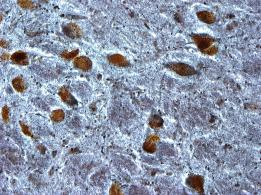
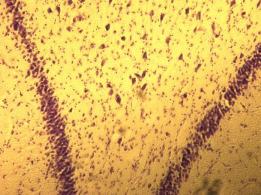
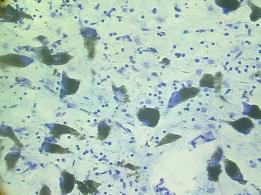
Images from the MUSC Neuropathology Laboratory website
|
 |
 |
 |
"Many of us are organ donors. Our driver's license conveniently notes this with a small heart symbol in the corner. This small act saves lives. But did you know that this designation does not cover all of your organs?"
"The Carroll A. Campbell Jr. Neuropathology Laboratory at MUSC is a state-wide research and service center dedicated to helping those combating Alzheimer's disease, Parkinson's disease and other related neurological disorders. Studying human brain tissue is essential for increasing our understanding of how the brain works and of the underlying mechanisms which cause these diseases. Researchers must study brain tissue from both deceased patients with these diseases as well as those without, in order to more clearly understand the causes of brain degeneration. Our hope is their findings will lead to improved treatment options and prevention strategies.""Named in memory of former South Carolina Governor Carroll A. Campbell, Jr., the Carroll A. Campbell Jr. Neuropathology Laboratory is committed to being the link between clinicians, scientists and pathologists involved in aging and dementia research throughout the state of South Carolina."
"Brain tissue research is a critical component to finding cures for such devastating diseases as Alzheimer's disease, Parkinson's disease and Stroke."
NOTE: The Columbia Parkinson's Support Group encourages as appropriate, the Parkinson community (PD patients and their family members, as well as others who have an interest in Parkinson's) to consider including their brain tissue along with their organ donation at death. The links below will help to provide more information on how to make such a donation.
» Frequently Asked Questions
» How A Tissue Donation Is Made
» Neuropathology Lab Staff
For more information, please contact: Nicholas Gregory at gregoryn@musc.edu - Telephone (843) 792-7867
Return to top of this page
|
Common chemical linked to Parkinson's
Post by: Caitlin Hagan - CNN Medical Producer
Exposure to a man-made chemical known as trichloroethylene, or TCE, is associated with a sixfold increased risk of developing Parkinson's disease, according to a new study published Monday in the Annals of Neurology. TCE is a common organic contaminant that pollutes groundwater, soil, and air. The study also found that exposure to another man-made chemical similar to TCE, known as perchloroethylene or tetrachloroethylene, or PERC, is associated with a tenfold increased risk of Parkinson's. Both chemicals are found in metal degreasers, metal cleaners, paint, spot removers, and carpet-cleaning fluids.
"The fact that we were able to find a six-to-tenfold increased risk in exposure I think is very meaningful," says Dr. Samuel M. Goldman, an associate professor of clinical research at The Parkinson's Institute and the lead author of the study.
Click Here to read the rest of the article
Thanks to Giles Grady of our support group for submitting this to us.
Return to top of this page
|
Steve Jobs Stanford Commencement Speech
Drawing from some of the most pivotal points in his life, Steve Jobs, chief executive officer and co-founder of Apple Computer and of Pixar Animation Studios, urged graduates to pursue their dreams and see the opportunities in life's setbacks -- including death itself -- at the university's 114th Commencement on June 12, 2005. Click here to see / hear Steve Jobs speech.
Return to top of this page |
 Steve Jobs
Image From
Stanford University
Mar 7, 2008
|
|
LSVT Therapy Helping Some Parkinson's Patients |
Sit down. Stand up. Reach up. Reach down. Take big steps. A new physical therapy program for Parkinson's disease patients is retraining their brains and bodies to make the expansive movements many have lost because of tremors, stiffness and muscle atrophy. The treatment emphasizes big, repetitive motions and operatic voice exercises to help patients speak louder, correct their posture and walk with agility instead of taking baby steps. CLICK HERE TO READ MORE
Return to top of this page
|

Good news ~ Free Antibiotics ~ Save money and feel better
The following information is provided by Publix Pharmacy http://www.publix.com/pharmacy/Home.do
At Publix, we're always looking for ways to make your life easier. And helping you manage healthcare costs is no exception. That's why we're pleased to tell you that some commonly prescribed generic oral antibiotics are free at your neighborhood Publix Pharmacy. To take advantage of this great deal, all you have to do is bring in your prescription for any of the medications below, and we'll give you up to a 14-day supply at no cost to you—regardless of your prescription insurance provider or the number of prescriptions you need filled.
|
TeachParentsTech.org
 |
Are you frustrated when you try to do things on your computer?
Do you wish there was a way to learn how to do things on your computer without having to take formal classes -or- ask someone to teach you? |
To quote the folks at Google "Every December, millions of tech-savvy young people descend on their homes only to arrive to a long list of tech support issues that their parents need help with. A few of us at Google thought there had to be a better way that would save us all a few hours each December..."
"The result of our brainstorm was TeachParentsTech.org, a site that allows you to select any number of simple tech support videos to send to mom, dad or uncle Vinnie."
"You fill out their online form to email the videos to whoever you want - perhaps YOURSELF -- to learn how to do all sorts of operations with your computer. The site is not perfect and hardly covers all the tech support questions you may be asked, but hopefully it’s a start! Here is the link to TeachParentsTech.org home page."
"Below are the main links to the different types of videos you can watch to learn how to do several different types of computer techniques, tips, tricks, etc."
Here is a sample video on "How to copy & paste" http://www.teachparentstech.org/copy-paste - pretty easy to follow - and you can play it over and over and over.
I hope you enjoy learn new information on how to use your computer in your pajamas at your leisure! -Dottie-
Return to top of this page
|
"Dance for PD"
by the
Mark Morris Dance Group
|
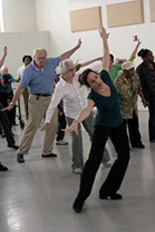 Photo obtained from "Dance for PD" website.
 |
 Photo obtained from "Dance for PD" website.
|
Dance for PD® is an on-going collaboration between the world known Mark Morris Dance Group (MMDG) and the Brooklyn Parkinson Group (BPG), a chapter of the National Parkinson Foundation. MMDG/BPG started offering free dance classes for people with Parkinson's in 2001 after BPG's Executive Director Olie Westheimer approached MMDG with the initial idea for a class.
Since 2005, Dance for PD® has offered dance classes for people with Parkinson’s disease in Brooklyn, New York and, through their network of partners and associates, in more than 40 other communities around the world. In Dance for PD® classes, participants are empowered to explore movement and music in ways that are refreshing, enjoyable, stimulating and creative. An on-going collaboration between the Mark Morris Dance Group and the Brooklyn Parkinson Group—a chapter of the National Parkinson Foundation—the Dance for PD® program also provides teacher training and nurtures relationships among other organizations so that classes based on our model are widely available.
Here are some links to see what Dance for PD® does for Parkinson patients. The PD patients look like they are enjoying dancing and having fun!
http://markmorrisdancegroup.org/resources/media/2-performances/11-why-dance-for-pd
http://www.pbs.org/news hour/bb/health/july-dec10/parkinson_12-09.html
http://www.youtube.com/watch?v=brHD72djUjg
Please visit http://markmorrisdancegroup.org/the_dance_center/outreach and scroll down to almost the bottom of the page to read more about this remarkable program of dance.
Return to top of this page
|
Medication Alert! - Amantadine Use May Impact Vision
Amantadine is a drug frequently used in early Parkinson's Disease. A study published in the 2010 June issue of the journal Ophthalmology shows that long-term use of Amantadine in patients with Parkinson's disease can significantly affect or damage corneas. If you have had long term Amantadine use, please consult your PD doctor and/or your ophthalmologist - take a printed copy of this article with you just in case your doctor is unaware of these studies.
"Amantadine affecting vision" was used for our Google search, resulting in many websites having information about studies regarding the effects of Amantadine on PD patients. Below are two other articles about Amantadine impacting vision. http://www.sciencedaily.com/releases/2010/06/100601114629.htm
http://www.ivanhoe.com/channels/p_channelstory.cfm?storyid=24461
Please note that this information is being provided as "Information Only"; and is meant to help you make knowledgeable decisions regarding Parkinson's care and treatment.
Return to top of this page
|

|
Muhammad Ali Parkinson Center and Movement Disorder Clinic
Offering Free E-Learning On-Line |
These services of online courses aim to make learning about Parkinson's disease and how to effectively manage it as engaging as possible. Currently there is 1 course available: Parkinson's Disease 101. This course has 3 modules, as well as an introduction to the Muhammad Ali Parkinson's Center and an evaluation. The expected duration of the course is 40 minutes and provides an overview of Parkinson's disease, dealing with diagnosis, symptoms and introduction to treatment options. Upcoming modules include medication, Deep Brain Stimulation surgery, exercise and nutrition. To access e-learning, simply log on to www.maprc.com and look for Learning Modules.
Return to top of this page
|
Good news ~ Free Antibiotics ~ Save money and feel better
The following information is provided by Publix Pharmacy http://www.publix.com/pharmacy/Home.do
At Publix, we're always looking for ways to make your life easier. And helping you manage healthcare costs is no exception. That's why we're pleased to tell you that some commonly prescribed generic oral antibiotics are free at your neighborhood Publix Pharmacy. To take advantage of this great deal, all you have to do is bring in your prescription for any of the medications below, and we'll give you up to a 14-day supply at no cost to you—regardless of your prescription insurance provider or the number of prescriptions you need filled.
|
An Interesting Article About "When the Assisted-Living Bill Balloons"
From The New York Times by Patrick Egan - "This fall, my father sat down for a semi-annual assessment with staff members at his assisted living facility in Tinton Falls, N.J. They decided his condition — at 72, he has advancing Parkinson’s disease — necessitated an upgrade to the next level of care. The meeting yielded an upgraded bill, too: a nearly 18 percent bump, about $12,000 a year...."
While it is difficult for some to read this article, the article discuses some of the difficulties that Parkinson patients, the elderly, and those with disabilities face regarding the cost of living in an assisted living facility. Some useful suggestions are offered - such as obtaining the services of a reputable geriatric-care manager or getting in touch with a state ombudsman for long-term care. CLICK HERE to read the full article on the Northwest Parkinson's website.
The Northwest Parkinson's website's FREE bimonthly newsletter is filled with the latest in education, science and insights. Sign Up Here
A place to start looking for resources are listed on our web pages of Doctors & Medical Providers We Use -and- Government Services Available
Return to top of this page
|
|
FREE ON-LINE EDUCATION
Are You A Parkinson's Patient, Caregiver, Family Member, Neighbor, Medical Provider, or Just Interested In Parkinson's? |
|
You Can Go Back To School And Learn About How To Care For Yourself and/or Parkinson Patients In Your Pajamas!
Parkinson patients, their family, their caregivers, and anyone who has an interest in learning more about the care of Parkinson patients can take this course!
Parkinson's Across the Lifespan: A Roadmap for Nurses is an online course designed by Parkinson’s nurse specialists to help other nurses better understand how to deliver comprehensive care to people and families living with Parkinson’s disease (PD). To learn more about this course go to http://support.pdf.org/nursing
| NOTE: Our opinion is that Parkinson patients, their family, their caregivers, and anyone who has an interest in learning more about the care of Parkinson patients would receive a benefit from this course! We encourage you to share the information about this course with any of your medical caregivers (doctor's offices, nurses, etc.) so that they will learn more about how to care for Parkinson patients and also to make them more aware of what Parkinson's disease is. |
Who should participate: This course is designed for nurses who want to better understand Parkinson’s in order to better care for the growing population of people living with the disease, and it is most suitable for nurses in long-term care, acute care, recent nursing graduates or other nurses who want to improve the care they give to people living with PD. A member of our support group has recommended this course ---
"I plan to distribute information sheets about the courses to nurses I will be encountering as I progress through my upcoming surgery and rehab. So far I receive only blank stares from nursing professionals when I mention PD and I would like to replace them with nods of acknowledgement."
When: You can view this course online 24 hours a day seven days a week from an Internet-connected computer.
Cost: FREE
How: Watch the four sessions that make up the course, each of which is approximately one and a half hours in length. Following each session, take a brief exam to test your knowledge of Parkinson’s. NOTE: For professional medical caregivers, after completing all four sessions and exams, you’ll be eligible for up to 7.5 CEUs. Please help promote this online course by emailing the link and sharing above information to others who may be interested: http://support.pdf.org/nursing
Return to top of this page
|
PD Clinical Trial of Interest |
What Is PPMI?
Parkinson's Progression Markers Initiative (PPMI) |
The Parkinson's Progression Markers Initiative (PPMI) is a landmark five-year clinical study aiming to identify biomarkers of Parkinson's disease progression, supported by The Michael J. Fox Foundation. People recently diagnosed with PD who are not currently taking medications are needed — and so are individuals who don't have PD (or even a close relative with PD) to serve as controls. LEARN MORE - CLICK HERE
Return to top of this page
|
Be Safe!
Be Careful!
Be Informed!
Be On Guard!
Many Parkinson patients and their caregivers utilize the internet for information, education, social networking and sending email. All too often identity theft can happen quickly.
Onguardonline.gov has practical information from the federal government and the technology industry to help you to be on guard against Internet fraud, secure your computer, and protect your personal information.
Return to top of this page
|
|
UPDATE for VETERANS WITH PD
VA Publishes Final Regulation to Aid Vietnam Veterans Exposed to Agent Orange
|
|
The Department of Veterans Affairs (VA) on August 31, 2010 published its final regulation establishing Parkinson’s disease, ischemic heart condition, and B-cell leukemia as service-connected disabilities for Vietnam veterans exposed to Agent Orange. The final regulation grants a 100% disability rating for Parkinson's disease, as well as retroactive veteran and survivor payments for qualifying veterans.
Even though the final regulation is published, the regulation is subject to a 60-day review period by Congress before the VA can begin paying benefits for new claims.
The Senate Veterans Affairs Committee is scheduled to hold a hearing on September 23 to review the rule and to discuss how the VA Secretary makes his decision to establish a disease as a service-connected disability. There certainly is no intention for Congress to actually block the implementation of the final rule, but the VA will have to wait 60 days before they can start compensating veterans.
Accessing health care and disability compensation will be easier for qualifying veterans. If a veteran served in Vietnam from January 9, 1962 to May 7, 1975 and now has been diagnosed with Parkinson’s disease, they are presumed to have been exposed to herbicides. The veteran does not have to prove an association between their disease and their military service. The presumption simplifies and speeds up the application process for disability compensation, and all those awarded service-connection will become eligible to join the VA healthcare system.
If you are a Vietnam veteran with Parkinson’s and have not applied for benefits, we encourage you to submit your application for compensation now—even before the VA can start paying claims. For more information about applying for VA benefits and Agent Orange, visit http://www.vba.va.gov/bln/21/AO/claimherbicide.htm For more information about applying for VA benefits and Agent Orange, visit the VA Web site http://tinyurl.com/243gfqe
DID YOU KNOW THAT THE VA HAS A PARKINSON'S DISEASE WEBSITE?
The VA has a website dedicated to information about Parkinson's Disease. The Veterans Affairs (VA) Parkinson's Disease, Research, Education and Clinical Centers (PADRECCs) and the National VA Parkinson's Disease Consortium websites can be accessed at http://www.parkinsons.va.gov/index.asp
For frequently asked question about Parkinson's of the Veterans Affairs Office CLICK HERE
Return to top of this page
|
PARKINSON ARTWORK --- Creativity and Parkinson's Gallery!
In this internet gallery, you can browse artwork created entirely by people living with Parkinson’s disease (PD) throughout the world. The gallery includes a variety of mediums of creative works - not just paintings, but also prose and poetry, photography, sculpture, crafts, dance and song. http://www.pdf.org/en/gallery |
Return to top of this page
Imaging advances in Parkinson’s disease
“Imaging in Parkinson’s disease diagnosis has been used primarily to rule out conditions that might mimic Parkinson’s. The traditional thinking is that the Parkinson’s brain appears normal in MRI scans. However, scientists at the University of British Columbia (UBC) MRI Research Centre in Vancouver are challenging this view….”
Return to top of this page
|
|
| Should You Get a Brain Scan to Confirm Diagnosis of Parkinson's Disease? |
|
NPF's National Medical Director, Dr. Michael Okun, blogs about the recently FDA-approved brain scan for Parkinson's
in this month's "What's Hot in PD?" Dr. Okun explains the pros and cons of brain imaging to confirm a diagnosis of Parkinson's. Click here for more information
Return to top of this page
|
Confused by drug plan changes? Are you in the Doughnut Hole?
SC Office on Aging wants to help.
The S.C. GAP program is ending on July 1, 2010 due to a lack of state funds. Changes in government pharmacy assistance for seniors can lead to confusion and concern.
The SC GAP program, administered by SCDHHS provided certain beneficiaries with Medicare Part D coverage assistance during the coverage gap (commonly called the doughnut hole). When the program began in January of 2006, state funds covered 95% of prescription drug costs for beneficiaries with limited monthly incomes in the doughnut hole. Due to budget cuts over the last four years, reimbursements had been reduced to 40%.
Medicare counselors from the state Office on Aging are available to advise seniors on alternative prescription drug assistance. Some assistance is already on the way to Part D beneficiaries who have entered the doughnut hole. The Center for Medicare and Medicaid Services began sending tax-free $250 rebate checks on June 10. The rebate is the first of several steps to eliminate the doughnut hole by 2020.
For more information on the Office on Aging or to reach a Medicare counselor, call toll free at (800) 868-9095 or visit the agency website at aging.sc.gov
[Information was obtained from the SC Office of Aging website.]
Return to top of this page
|
US Government Health Care Bill Information
If you have questions about the provisions of the health care changes that apply to you, go to healthcare.gov
The amount of information on this website can be overwhelming, but this site does a good job of pointing you in the direction to topics of specific interest. For example - you can click on "Find Insurance Options", and you will be guided through the recent health care bill insurance changes.
Return to top of this page
|
 |
How to dispose of meds safely ---
"Every day, 2,500 teenagers use a prescription drug to get high for the first time. However, drug abuse isn't the only risk associated with unused medications. Ingesting expired medications can be harmful. Improper disposal of medications that are no longer indicated or prescribed may lead to accidental ingestion causing drug interactions or adverse drug events. Accidental ingestion by children, the elderly, or pets can also occur." [Information from the "Dispose My Meds" website.]
It is bad when --- Leftover medicine (meds) are flushed down the drain, polluting our lakes and rivers, as well as our drinking water. More than 100 different pharmaceuticals have been detected in lakes, rivers, reservoirs and streams throughout the world.
It is bad when --- Meds are kept at home, creating a risk for small children and teens to poison themselves. Each year in the United States, more than 71,000 children aged 18 and younger are seen in emergency rooms for unintentional overdoses of prescription and over-the-counter drugs.
It is bad when --- Passing along to a family member or to a friend, encourages people to self-medicate without a prescription.
To help dispose of unused medications properly, the National Community Pharmacists Association (NCPA®) has launched "Dispose My Meds" campaign. DisposeMyMeds.org is an online resource to help you to find medication disposal programs at the local independent community pharmacy near you. The National Community Pharmacists Association, its members and partners are offering you safe disposal of unwanted consumer medications in local community pharmacies around the country.
To find a participating community pharmacy near you CLICK HERE
Return to top of this page
|
Good vibrations for Parkinson's
One million Americans are living with it, and 60,000 people were diagnosed last year. Parkinson's disease slowly steals a person's control over their body. Now, some doctors are looking into the past to devise treatments for the future. It's all about vibrations. CLICK HERE
Return to top of this page
|
Mayo Clinic Develops Potential New Therapy to Stop the Progression of Parkinson's Disease
|
|
The Mayo Clinic has on-going research regarding Parkinson's. Here is an sample article showing the types of Parkinson research the clinic performs and the type of information about Parkinson's available on their web site..
Mayo Clinic researchers have developed a method to reduce the production of alpha-synuclein in the brain. Alpha-synuclein is a protein that is believed to be central to the cause of Parkinson's disease. All patients with Parkinson's disease have abnormal accumulations of alpha-synuclein protein in the brain.
Return to top of this page
|
The Tip Jar - By the Northwest Parkinson's Foundation
Welcome to the Tip Jar. Over the many years of working within the Parkinson's community the Northwest Parkinson's Foundation has heard some wonderful tips and insights on living with Parkinson's day-to-day. On this page they have compiled some of those helpful hints. These user tips are for the patient, family member and caregiver, and are meant to help improve the quality of life for those touched by PD. You can also add your own tip.
Return to top of this page
|
|
mySChospital - You can research hospitals before receiving care
As a patient you play a key role in making decisions about your hospital care. If patients have the opportunity to research hospitals before receiving care, perhaps some situations and complaints could be avoided. That’s where “mySChospital” comes in. This Web site provides snapshot information about the quality, safety of care, and performance in key areas as provided by roughly 65 South Carolina hospitals (including the midlands Lexington Medical Center hospitals, the Sisters of Charity Providence Hospitals, and the Palmetto Health hospitals). With this information, you can see how often each hospital provides recommended care for patients with certain conditions or the progress hospitals have made towards national patient safety goals. This information may be used by the public to compare how different hospitals perform and to promote quality improvement efforts within hospitals.
In an effort to provide excellence in service, quality and safety of care to their patients, South Carolina hospitals have voluntarily collected and reported standardized data on "mySChospital." This public reporting is guided by the South Carolina Hospital Association's Quality and Patient Safety Advisory Council and the Every Patient Counts: The SC Partnership to Advance Patient Safety and Quality. The mission of "mySChospital" is to develop consumer-focused initiatives that will provide reliable, valid measures of health care in South Carolina; and to aid the selection of quality health care and quality improvement activities within the hospital field.
Return to top of this page
|
The Neglected Side of Parkinson's Disease by Rothstein, Ted L Olanow, C Warren
The following is an excerpt from an article on the Northwest Parkinson Foundation Web Site.
"Shaking and slowness of movement may be the most obvious symptoms, but they are often not the most debilitating ones. Parkinson's disease may not be an epidemic, but it's more common than you might think. Approximately 1,000,000 Americans suffer from the illness, with 60,000 new cases appearing each year in the United States alone."
"This neurodegenerative disorder, which is both progressive and incurable, usually begins around age 60, so neurologists believe that its prevalence is likely to increase dramatically with the graying of the nation's population. But Parkinson's disease shouldn't be thought of only as an affliction of old age; it can also strike considerably earlier in life, a fact that has become well known through such prominent examples as Michael J. Fox (diagnosed at age 30) and Muhammad Ali (at age 42)."
Click Here to read the complete article of one of the best discussions of Parkinson's Disease.
Return to top of this page
|
|
Selected Herb-Drug Interactions
Many patients are self-medicating with herbal products, and more and more people are at risk for interactions among supplements or between supplements and prescription drugs. Provided by the University of Michigan Health System is a list of herbs that can interact with medications you may be taking. This information is approved and/or reviewed by U-M Health System providers but it is not a tool for self-diagnosis or a substitute for medical treatment. From AARP Magazine July & August 2008
Return to top of this page
|
Disaster Resources for the Public
No one likes to think about disasters, whether natural or
man made, but thinking ahead and preparing, together with
knowledge about first steps, can save you and your family treasures from ruin.
The Heritage Emergency National Task Force is a partnership of 41
national service organizations and federal agencies created to protect
cultural heritage from the damaging effects of natural disasters and
other emergencies. The Task Force was founded in 1995 and is
co-sponsored by Heritage Preservation and the Federal Emergency
Management Agency.
While the
Heritage Emergency National Task Force has mainly developed a collection of handy tools and resource lists designed especially for libraries, museums, historic sites, and arts organizations, etc. for disaster aid and developing relationships with emergency responders, many of these practical application tools also apply to individuals when faced with disasters like hurricanes, fire, floods, etc. Below is a sample of the information available.
Hurricane Safety Flyer Hurricane information from the National Weather Service (PDF).
Essential Records for Families: What you need to know before you evacuate A handy checklist and reference guide from The Georgia Archives (PDF).
Save Your Treasures the Right Way Hurricanes and floods harm treasured possessions like photos and other keepsakes. Sometimes people discard family heirlooms that could have been saved or, lacking good advice, make the damage worse. This doesn't have to happen!
Preparing, Protecting, Preserving your Family Treasures Simple instructions, as well as links to more comprehensive information for preparing, protecting, preserving many types of family treasures.
Return to top of this page
|
Another Parkinson Disease Symbol for PD Awareness
The tulip — a red flower with distinctive leaves shaped like the letters “p” and “d” — was designed by a "Young Onset" person with Parkinson’s (PWP) from Washington state — Karen Painter.
"While grassroots support for making Karen's tulip the national symbol for Parkinson’s awareness is growing, organizations and volunteers are encouraged to be proud of their organizational affiliation; and to use their own organization's symbol with pride. They should feel free to also use the PDTulip as a symbol that can represent ALL people with Parkinson's and ALL organizations and ALL scientists in the US who are working for the cure. Please show your support of the PDTulip for Parkinson's Awareness." by Supporters of the PDTulip for Parkinsons' Awareness
Return to top of this page
|
|
ODDS & ENDS - A place where we put anything that doesn't fit anywhere else on our website
BOOKS & PUBLICATIONS - What we are recommending for reading and where to find them
VIDEOS - What we are watching on the internet and where to find them
FAQS [Frequently Asked Questions] - Answers to some of the questions that people have sent us
|
|


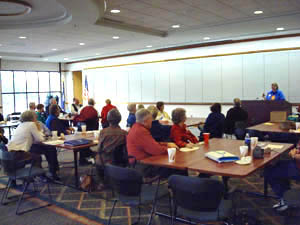

 A study conducted at the Research Institute of the McGill University Health Centre found caffeine to help control movement in people suffering from Parkinson’s.